
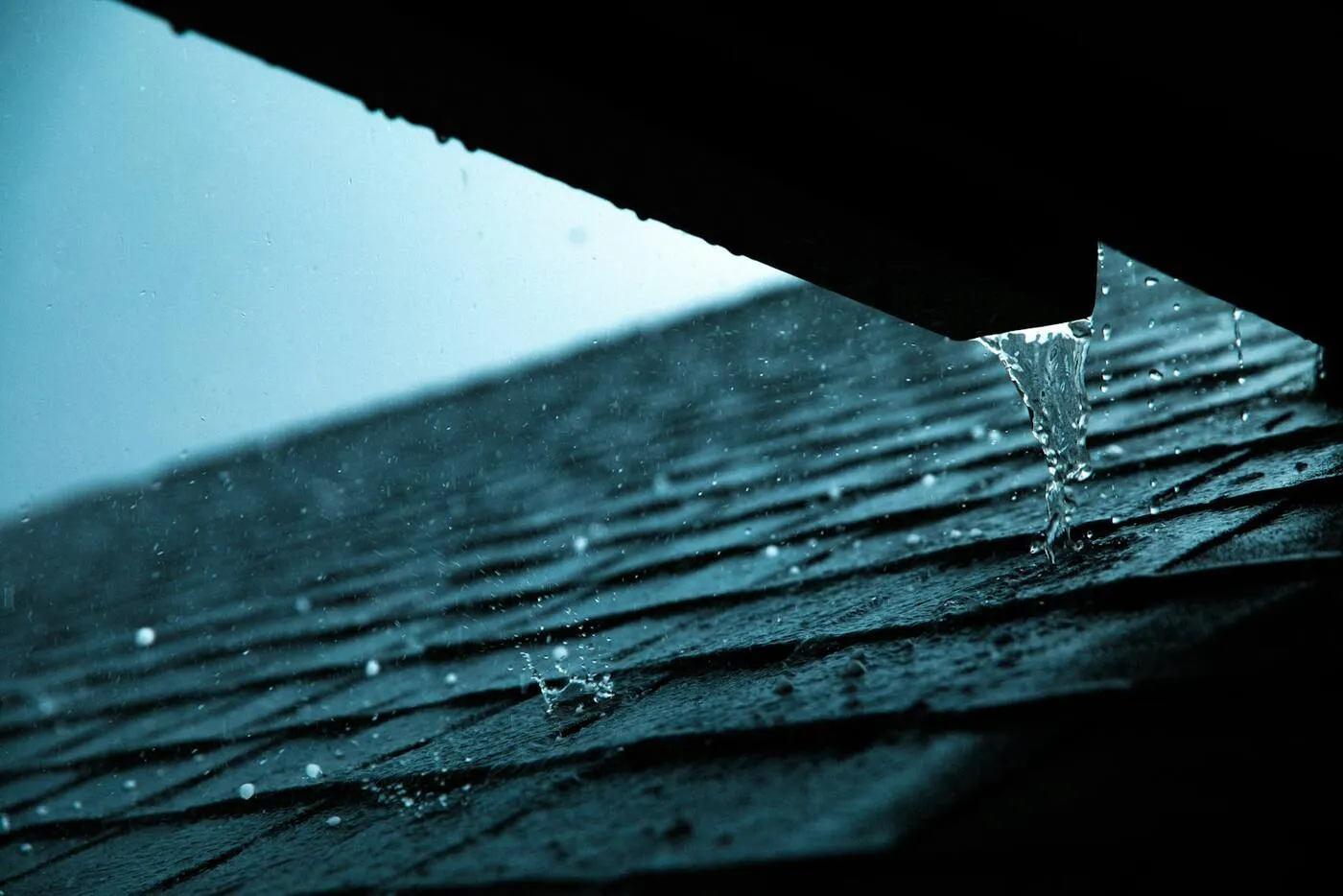
Quick answer. In Valencia, much of the year's rain can fall in a few intense episodes, often in autumn. Before they arrive, it is worth checking that water can drain off the roof: clean drains and gutters, downpipes without blockages or leaks, and waterproofing without tears. It is a simple check that prevents many leaks.
Would you like us to take a look? Send us photos and we’ll give you a no-obligation quote.
Why autumn is the time to check
After the summer, sun and heat have taken their toll on roofs and joints, and leaves, dust and dirt have built up in drains and gutters. When a heavy storm arrives, the water has to drain quickly: if a drain is blocked, the roof floods and the water looks for any weak point.
What to check on the roof and terrace
- Drains and grates clean and free of debris that slows the water.
- Puddles that are still there days after it rains: they point to poorly designed falls.
- Waterproof membrane or coating with cracks, bubbles or lifted areas.
- Junctions with parapets, chimneys and aerials, where leaks often start.
- Expansion joints that are open or unsealed.
If the terrace is already causing problems, see waterproofing a terrace without lifting the floor.
Gutters and downpipes
- Gutters: free of leaves and soil, firmly fixed and sloping towards the downpipe.
- Downpipes: no blockages, no dripping joints and no damp patches around them on the facade or in the courtyard.
- Connection to the drain: water should not overflow at the bottom when it rains heavily.
A downpipe leaking inside a courtyard can take months to show. We explain it in leaking downpipe in a building.
Facade, cornices and balconies
Water also gets in through the top of cornices and balconies and through window joints. Before the rains, it is worth checking:
- Cracks in cornice copings and window sills.
- Drip edges that do not work: water runs along the underside of the balcony instead of dripping off.
- Open joints between the windows and the facade.
- Render that sounds hollow: with water and wind it can end up falling.
If there are already leaks
- Note when the stain appears: with any rain, only with heavy rain or only with wind from one side.
- Take photos of the stain and of the outside area above it.
- Tell the property manager or the community president if it affects common elements.
- Ask for the water entry point to be found before repairing: see leak detection.
If the stain is on the top floor, start with leaks on the top floor: possible water entry points.
Common mistakes to avoid
- Waiting for the first storm to check.
- Cleaning the drain but not the downpipe.
- Covering a leak with silicone from outside without knowing where the water gets in.
- Going onto the roof without safety measures: if there is no safe access, it is better left to trained staff.
Common questions
How often should gutters and drains be cleaned?
At least once a year, ideally at the end of summer or the start of autumn. If there are trees nearby, it may need doing more often.
Can the community check the roof itself?
A visual check from a safe access point, yes. Working at the edge of a roof, on high gutters or in courtyards requires safety equipment and trained staff.
What should I do if water comes in during a storm?
Protect whatever is underneath, collect the water and, if there is an electrical risk, switch off the power in that area. Once the rain has passed, take photos and ask for the water entry point to be found.
Want to check your building before the rains?
Send us photos of the roof, the gutters or the stains and we will tell you what is worth checking.
Or write to us at info@buildararat.com
This guide is for guidance only and does not replace an inspection of the property or reports by qualified technicians.